Cross-border trade absorbs supply spikes
More than one in five new cars in Europe is now fully electric. However, the used-car market is developing very differently from region to region, which means that many vehicles find a new owner outside the country where they were originally registered.
This benefits B2B auction platforms operating across Europe. They take on large vehicle inventories from leasing companies, fleet operators and car dealers and distribute them to wherever demand currently exists.
Exports are becoming a balancing mechanism: Local oversupply is matched with markets where demand is growing elsewhere in Europe.
Trading volume grows by more than 200%
According to Auto1, the Europe-wide trading volume for used electric cars increased by more than 200% in the second quarter compared with the same period a year earlier. In Germany, the increase was even higher at 225%.
| Metric | Figure | Context |
|---|---|---|
| Europe-wide B2B trading volume | more than 200% growth | Second quarter compared with the same quarter a year earlier |
| B2B trading volume in Germany | 225% growth | Significantly above the overall market trend |
| Ownership transfers in Germany | 72% growth | First half of the year compared with the same period a year earlier |
| Export share at Auto1 | 75% | Three out of four EVs traded are sold abroad |
The figures are not entirely comparable. A platform’s B2B trading volume and official ownership-transfer statistics cover different parts of the market. Nevertheless, the gap shows how rapidly the professional used-EV trade is becoming international.
Ex-lease vehicles arrive in large batches
Many of the electric cars currently on offer come from commercial fleets. When a large number of identical leases expire at the same time, hundreds of vehicles of the same model can enter the market within a short period.
A regional used-car market cannot always absorb such spikes. Platforms such as Auto1, BCA and Autobid therefore market these inventories across Europe. When many vehicles arrive at once → cross-border sales stabilize prices and shorten the time they remain unsold.
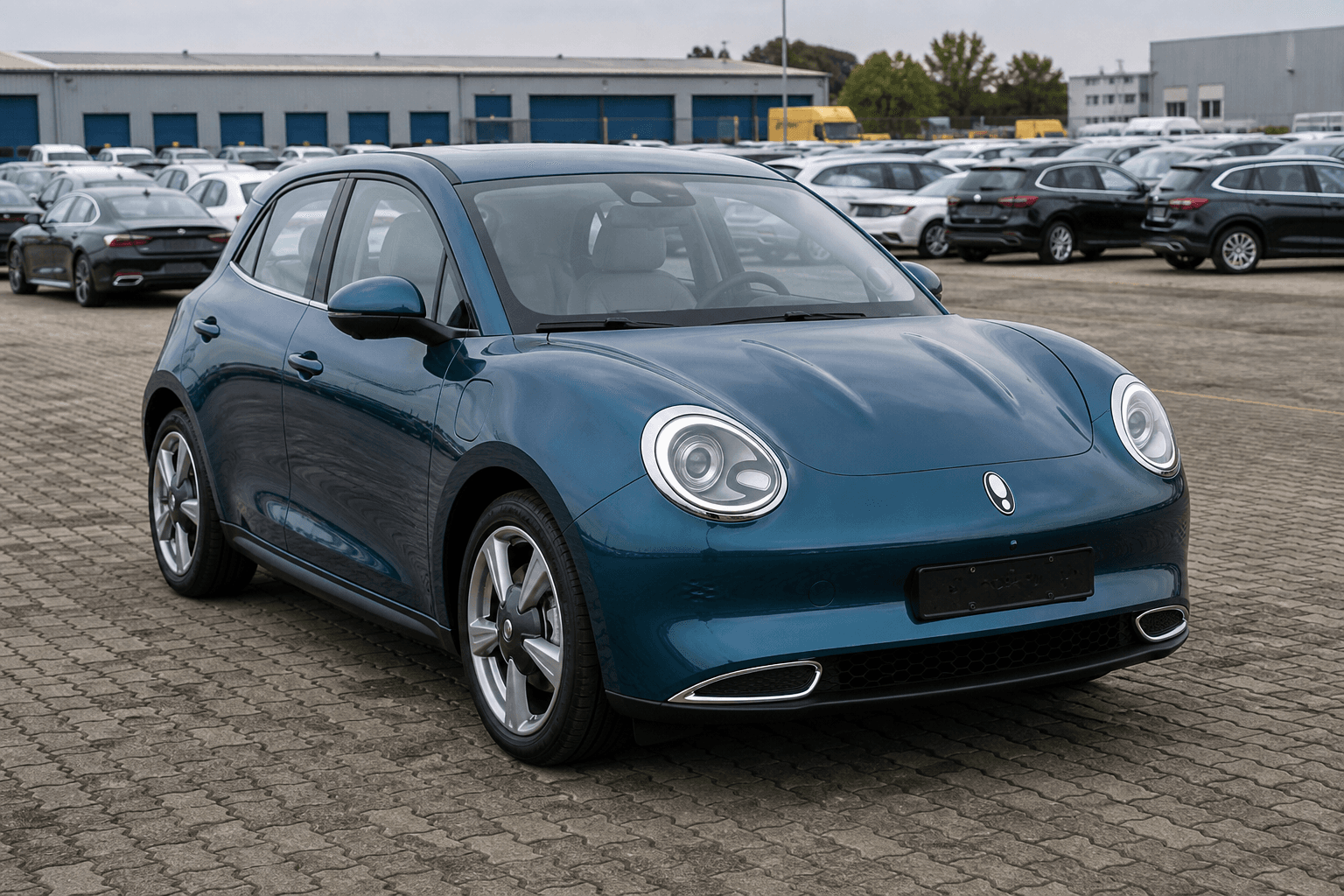
The GWM Ora 3 demonstrates how strongly individual fleets can shape the market. It was the most frequently traded electric car on Auto1 in Germany in the second quarter, even though only around 5,800 units of the model were registered in the country at the start of the year.
Germany plays only a minor role as a destination market
Germany ranked just seventh among destination countries for used EVs. Particularly large numbers of vehicles were sold to France, Spain and the Netherlands. Romania, Portugal, Hungary and Poland are also becoming increasingly important sales markets.
This points to demand catching up in Southeastern and Eastern Europe. At the same time, many German buyers remain cautious about used electric cars, citing factors such as potential battery costs, uncertain residual values and real-world range.
However, such concerns need to be assessed for the specific vehicle. A long-term assessment of the VW ID.3 battery, for example, shows that high mileage does not automatically mean a worn-out battery. The widespread issue of EV range anxiety can also be put into perspective by considering realistic driving profiles.
Privately owned used vehicles are likely to broaden the market
Private owners have so far tended to keep their electric cars longer than commercial users. Auto1 therefore does not expect a more significant increase in privately owned used vehicles entering the market until around 2030. This assessment is a market forecast, not a fixed timeline.
A broader supply could change both the model mix and pricing. At present, fleet inventories often determine which vehicles are available at low prices in the short term. Later, a wider range of model years, equipment levels and mileages is likely to become available.
What exports mean for buyers in Germany, Austria and Switzerland
Europe-wide trade prevents large inventories from remaining in individual national markets indefinitely. This can stabilize residual values, but it can also mean that particularly affordable vehicles are quickly exported. The cited trading figures do not provide separate data for Austria and Switzerland, so Germany should not be treated as representative of the entire DACH region—the German-speaking markets of Germany, Austria and Switzerland.
When buying a used EV, three factors in particular are becoming more important:
- a verifiable battery condition supported by a meaningful state-of-health report
- the available charging power and current software version
- remaining warranty coverage, service history and regional spare-parts availability
The rapid growth in exports is therefore not a sign of weak demand for used electric cars. Rather, it shows that supply and demand are still unevenly distributed across Europe and that professional dealers are increasingly bridging this gap through cross-border trade.