
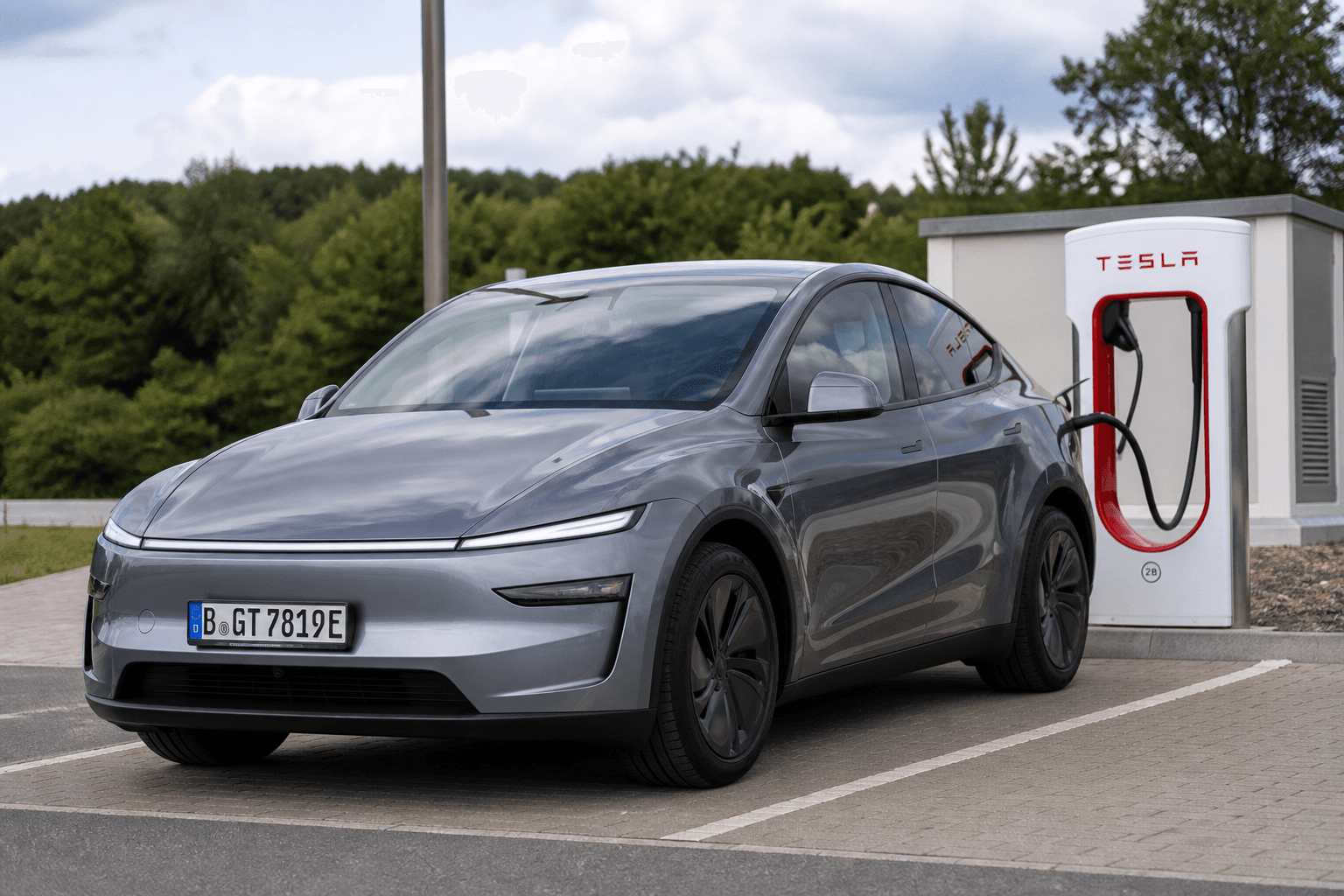
Tesla lowers Supercharger prices in Germany
Tesla has noticeably reduced charging rates at several German Supercharger locations. In September 2026, prices as low as €0.20 per kWh have been reported at some locations outside peak hours. Even during busier periods, some stations now charge less than €0.40 per kWh.
At its cheapest locations, Tesla is therefore undercutting many public fast-charging rates. Its flexible pricing is particularly appealing: when demand is low, prices can fall significantly. Choose a location and use a cheaper time slot → charging costs can drop considerably.
The new Supercharger prices are attractive, but they do not apply nationwide or around the clock.
These Supercharger rates are currently being reported
Most reports of lower prices are coming from western Germany. Charging remains significantly more expensive in other regions. The following overview is therefore only a snapshot, not a nationwide rate.
| Location or rate | Reported price |
|---|---|
| Selected locations outside peak hours | from €0.20 per kWh |
| Cologne Bonn Airport | from €0.29 per kWh |
| Troisdorf | from €0.29 per kWh |
| Hilden | around €0.37 per kWh |
| Selected locations in Saxony | up to €0.60 per kWh |
A simple calculation illustrates how substantial the difference can be in everyday use. Charging 60 kWh at €0.20 instead of €0.60 per kWh reduces the cost from €36 to €12. That represents a saving of €24 per charging session.
Other electric cars can benefit too
Many Superchargers in Germany are now open to non-Tesla vehicles. The Tesla app shows whether a location is available and which specific rate applies. Prices for other brands may differ from those for Tesla vehicles, while a paid membership can also reduce the price per kWh.
For drivers of a Tesla Model Y or Tesla Model 3, charging remains particularly straightforward because the vehicle, charging route planning and billing are closely integrated. Owners of other brands start and pay for charging through the app.
What to check before charging
- Check the current price per kWh in the Tesla app immediately before setting off
- Distinguish between rates for Tesla and non-Tesla vehicles
- Consider cheaper time slots outside peak hours
- Check whether the location is open to other vehicle brands
Why Tesla’s dynamic pricing stands out
Tesla adjusts its Supercharger rates relatively flexibly according to location and demand. Lower prices during quieter periods can encourage drivers to shift their charging sessions to different times. This improves station utilization and, ideally, reduces queues during particularly busy periods.
Affordable fast-charging rates also make longer journeys easier to budget for and can further reduce the often-overestimated range anxiety associated with electric cars. However, the price actually displayed at the individual location remains decisive.
Price cut does not automatically apply across the DACH region
The reported figures refer to selected Superchargers in Germany. They do not indicate a consistent trend across the wider DACH region—Germany, Austria and Switzerland. Even within Germany, prices can differ by several dozen cents per kWh.
Overall, Tesla is sending a strong signal with rates starting at €0.20 per kWh, even if such prices are available only locally and at certain times. Drivers who can charge flexibly and check the app in advance can currently find some of the most attractive fast-charging offers on the Supercharger network.


