Nio Is Reducing Its Company-Owned Network in Germany
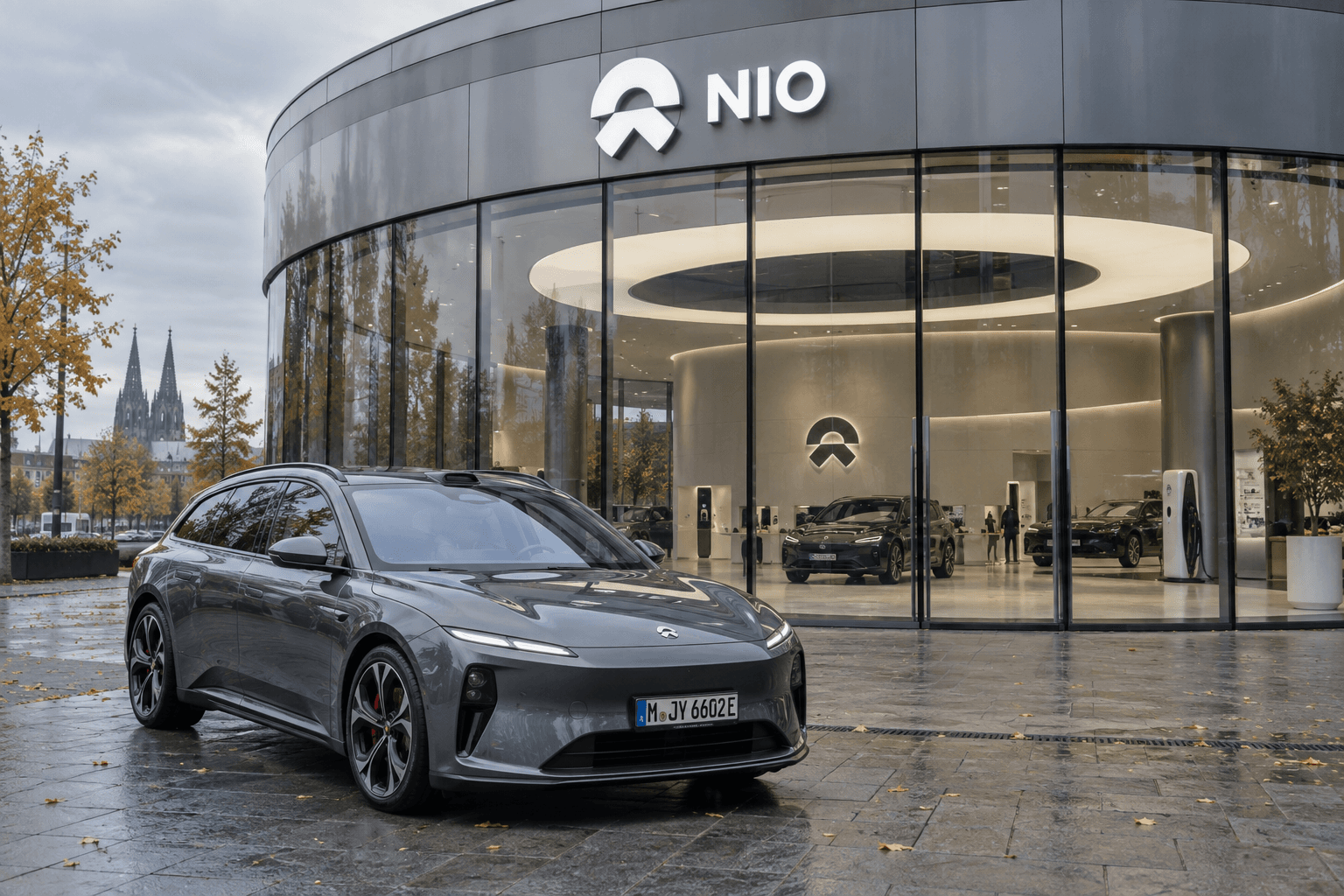
Nio is restructuring its German operations. The hub in Cologne-Marsdorf, which only opened in June 2024, is set to close at the end of September. The approximately 2,600-square-meter site currently combines a showroom, workshop, vehicle handover area, and warehouse.
The hub in Weiterstadt near Frankfurt is also set to be closed. Based on current plans, this would leave Munich as the only company-owned Nio Hub in Germany. The Nio House in Hamburg already closed during the summer.
The site closures point to a significant change in strategy, but not necessarily to a complete withdrawal from Germany.
German Registration Figures Have Collapsed
The restructuring comes as no surprise. According to Germany’s Federal Motor Transport Authority (Kraftfahrt-Bundesamt), only one new Nio was registered in August 2026. From January through August, the total was 19 vehicles, 90.1% fewer than in the same period of the previous year.
| Period | New Nio Registrations in Germany |
|---|---|
| 2023 | 1,263 |
| 2024 | 398 |
| 2025 | 325 |
| January to August 2026 | 19 |
| August 2026 | 1 |
Nio is therefore performing significantly worse than the overall market. Electric cars are regaining market share in Europe, as shown by the current EV boom in Europe. At the same time, other Chinese brands are proving that growth is possible, as demonstrated by Leapmotor’s increase in sales.
From Direct Sales to a Partner Network
Nio originally relied on a strong company-owned presence in Germany. This included prestigious retail spaces, its own service offerings, and the development of battery swap stations. However, this model generates high fixed costs even when only a small number of vehicles are sold.
In the future, Nio is likely to draw a clearer distinction between company-owned locations and local sales and service partners. The company is already relying more heavily on independent businesses for maintenance and repairs. Fewer company-owned hubs → lower ongoing costs, but also less direct visibility for the brand.
Arguments in Favor of the Strategic Shift
- Nio can continue its German operations with lower fixed costs.
- Local partners can provide service without Nio having to operate its own workshops everywhere.
- Capital and staff can be focused on markets with stronger demand.
What Will Become More Difficult for Customers
- In-person advice and vehicle handovers will no longer be available at several company-owned locations.
- Service quality and appointment availability will depend more heavily on the individual partner business.
- The originally planned brand experience will have a significantly smaller presence outside Munich.
Nio Continues to Grow Globally
The weak situation in Germany does not reflect the company’s global performance. By the end of August 2026, the Nio Group had delivered 262,893 vehicles worldwide, significantly more than in the same period of the previous year.
The problem is therefore primarily regional. In Germany, Nio faces strong established manufacturers, high sales costs, and growing competition from other Chinese brands. Its model lineup is also positioned predominantly in the demanding premium price segment.
No Confirmed Withdrawal, but a Clear Cutback
Nio officially remains committed to Germany and Europe. Existing customers are expected to continue receiving support, and the company has not announced a complete market exit. However, the closures show that its previous strategy of maintaining a dense network of company-owned locations is not viable under current sales conditions.
The key question now is whether Nio can put more vehicles on the road through partners while ensuring reliable service. Munich, as its last company-owned hub, can serve as an anchor for the brand. For a sustainable relaunch, however, Nio primarily needs competitive offerings, greater brand awareness, and significantly higher sales volumes.