NIO and Geely Join Forces on Battery Swapping
Geely Holding and NIO are significantly expanding their cooperation on charging infrastructure and battery swapping. The partnership unveiled on September 28, 2026, includes cross-shareholdings, interconnected charging services and joint technical standards for future electric vehicles.
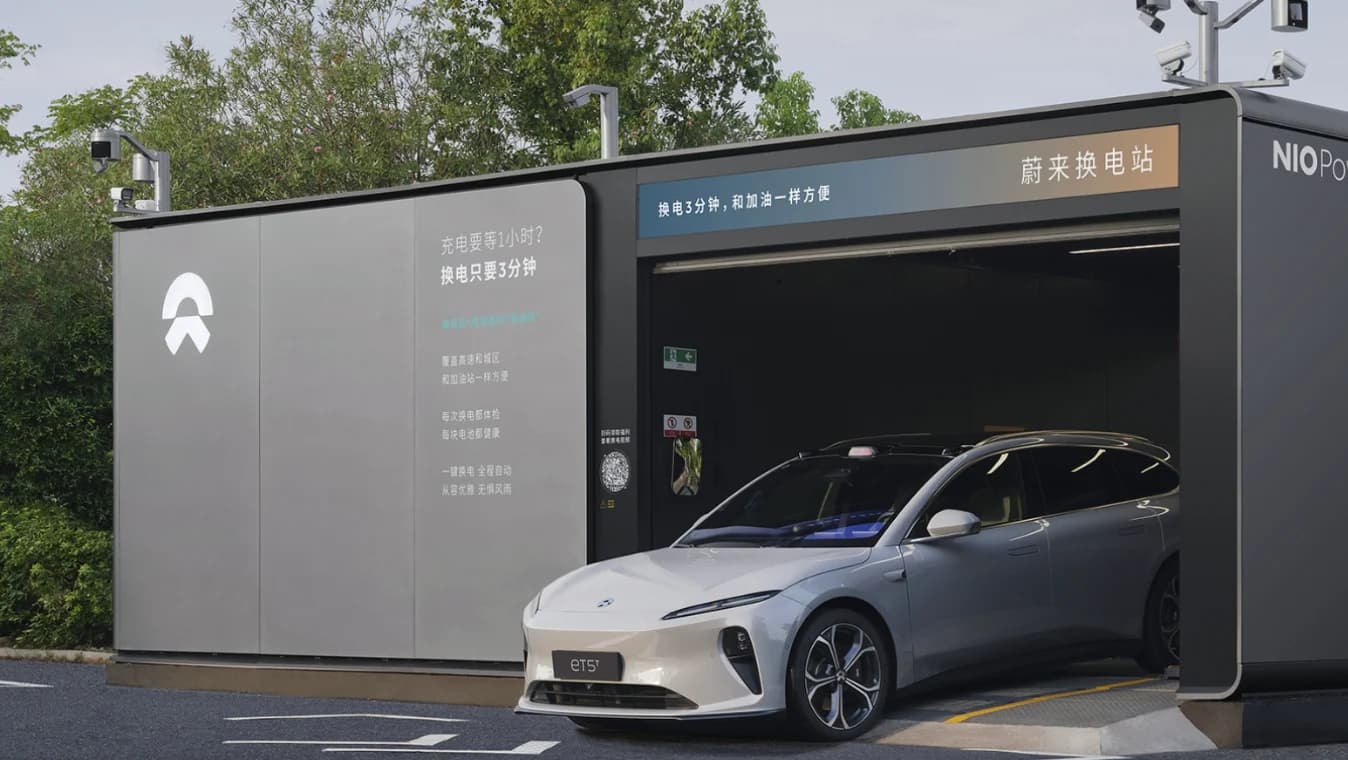
The goal goes beyond a straightforward partnership between two brands. In China, battery swapping is intended to evolve from a manufacturer-specific solution into a more widely accessible infrastructure that also supports new models from the Geely Group.
The crucial step is not the investment itself, but the planned compatibility of future Geely electric vehicles with NIO’s battery-swapping network.
How the Shareholdings Are Structured
Geely Holding is acquiring a 30% stake in NIO Power. In return, it will contribute its Yiyi Power subsidiary in full and make a payment of 640 million yuan. This will consolidate the battery-swapping station business for commercial vehicles within NIO Power.
In return, NIO is acquiring a 10% stake in Haohan Power, Geely’s charging division. The two companies intend to fully connect their charging services, giving customers access to a significantly larger shared network in the future.
| Transaction | Stake | Strategic purpose |
|---|---|---|
| Geely invests in NIO Power | 30% | Yiyi Power and the commercial battery-swapping business will be integrated |
| NIO invests in Haohan Power | 10% | Charging networks and digital access systems will be connected |
Geely Is Developing Compatible Electric Vehicles
Geely plans to design new electric vehicles that support the jointly developed battery-swapping standard. NIO Power will build and operate the necessary infrastructure. The companies have not yet announced which brands and models from Geely’s broad portfolio will participate first.
True compatibility requires more than a battery with a similar capacity. Dimensions, mounting points, cooling connections, high-voltage interfaces and communication with the battery management system must all be precisely coordinated. The software must also identify which battery has been installed and determine its condition.
It also remains unclear which cell chemistry the shared swappable batteries will use. This is relevant because LFP batteries now clearly dominate the Chinese battery market and are well suited to heavily used battery-swapping networks due to their comparatively low cost and long cycle life.
10,000 Battery-Swapping Stations Planned by 2030
NIO aims to operate a total of 10,000 battery-swapping stations by 2030. The network’s expected annual electricity demand is then projected to exceed 10 TWh. That would make the battery-swapping business a significant part of China’s energy system.
Geely already brings practical experience to the partnership. Yiyi Power operates around 470 battery-swapping stations in China, which have primarily served taxis and ride-hailing vehicles to date. The approach is particularly attractive in this sector because short downtimes are especially important commercially.
At the same time, Geely plans to have more than 22,000 charging stations with 100,000 charging points by the end of 2027. The network is intended to cover all Chinese cities and county-level regions. Connecting it to NIO’s infrastructure will not only increase the number of accessible locations but could also improve utilization at individual sites.
Why Common Standards Are Crucial
Battery-swapping stations are capital-intensive and require a sufficient number of compatible vehicles. A closed system serving only one brand limits potential utilization. If several manufacturers use the same technical specifications, the cost of building and operating the infrastructure can be spread across a larger vehicle base.
For drivers, the practical advantage is an extremely short stop for energy. At the same time, operators must transparently address battery rental, billing, degradation and remaining capacity. After all, anyone exchanging a new battery for an older one expects a clear and fair system for assessing its condition.
What the Partnership Means for Europe
For now, the agreement is clearly focused on China. No launch of shared battery-swapping models has been announced for Germany, Austria or Switzerland. It also remains unclear whether Geely’s European brands will later adopt the same battery design.
Nevertheless, the development is relevant to Europe. Geely is expanding its presence on the continent, including with planned entry-level models such as the Geely E2 for Europe. If a cross-brand standard becomes established in China, it could eventually influence the European debate over battery swapping and interoperable charging services.
In the short term, conventional fast charging remains by far the more important solution in Germany, Austria and Switzerland, collectively known as the DACH region. However, the partnership between NIO and Geely shows that battery swapping is no longer viewed solely as a niche concept for a single brand. With compatible vehicles, large fleets and high station utilization, it could develop into a second viable model alongside fast charging in China.