CATL Starts Trial Cell Production in Debrecen
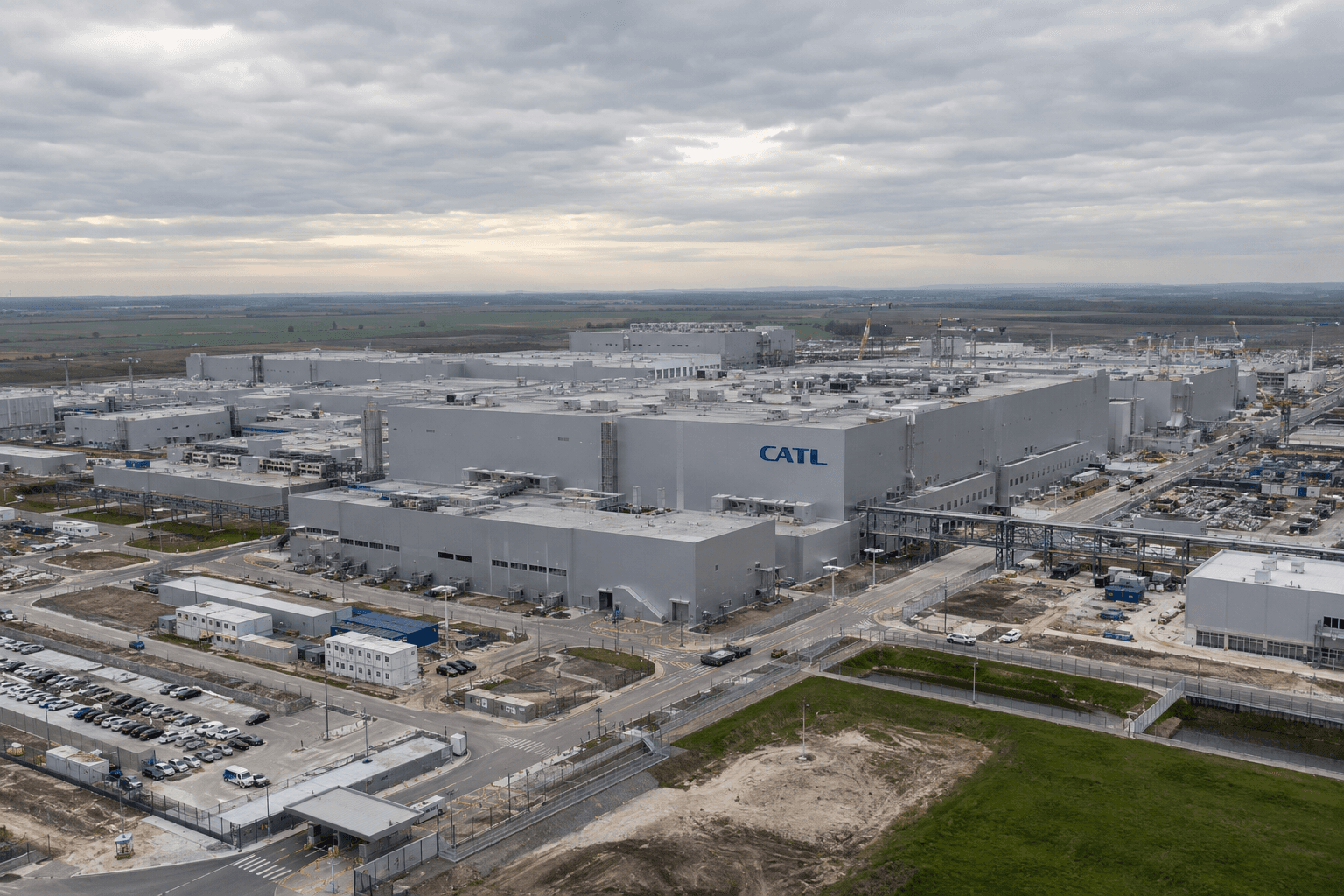
CATL has reached an important milestone for its new battery cell plant in Debrecen, Hungary. The first two production lines are now in trial operation after the necessary regulatory requirements were met.
This does not yet amount to regular series production. During this phase, machinery is configured, processes are fine-tuned and the quality of the cells produced is tested. With battery cells in particular, small deviations in coating, drying or assembly can have significant consequences for performance and service life.
Trial operation is more than a symbolic start, but it is not yet a guarantee of high production volumes in the short term.
Capacity of Up to 100 GWh Planned
CATL announced the plant in 2022 as its second European cell factory after the site in Arnstadt, in the German state of Thuringia. Investments of around €7.34 billion and a long-term annual capacity of up to 100 GWh are planned for Debrecen.
| Metric | CATL Debrecen Plant |
|---|---|
| Location | Debrecen, Hungary |
| Planned investment | €7.34 billion |
| Planned annual capacity | Up to 100 GWh |
| Current status | Trial production on two lines |
| Construction start for the first phase | 2023 |
Once fully expanded, Debrecen would be CATL’s largest plant outside China. Its scale shows that the facility is not intended merely for individual vehicle projects, but is set to play a central role in Europe’s battery supply.
Mercedes and BMW Await Locally Produced Battery Cells
Prospective customers include Mercedes-Benz, BMW and other European manufacturers. Mercedes had to adjust its supply chain in the meantime and source battery cells from China to supply vehicles such as the electric Mercedes GLC and the electric VLE.
BMW is also building a new vehicle plant in Debrecen. The site is expected to play an important role for the Neue Klasse, while its European supply chain is being expanded in parallel, including through the ramped-up production of electric BMW drivetrains in Steyr.
The close proximity of cell production and the vehicle plant shortens transport routes and reduces dependence on imports from China. This does not automatically lower vehicle prices, but it can improve logistics, planning certainty and the supply chain’s carbon footprint.
Why Series Production May Still Take Time
At new battery factories, the ramp-up phase typically takes several months. The cells must first achieve consistent quality standards across numerous production batches. Only then can capacity utilization be increased gradually.
As the world’s largest battery cell manufacturer, CATL has extensive experience. Even so, ramping up a new factory remains complex: New equipment, local suppliers, skilled personnel and regulatory requirements all have to work together at the same time. Trial production started → stable high-volume production is therefore not automatic.
Environmental Requirements and Political Scrutiny Are Increasing
Construction of the plant has repeatedly been accompanied by permitting issues and environmental debates. Residents and environmental organizations raised objections including water consumption, potential noise pollution and effects on the region’s water resources.
Authorities also took action over a non-compliant wastewater discharge and elevated nickel levels among employees. CATL says it has remedied the identified shortcomings and obtained all permits required for trial operation. Battery modules had already been manufactured at the site; the more technically demanding cell production is now following.
Following the change of government in Hungary, the battery industry is expected to face stricter oversight. However, no direct link has been established between this political approach and the delays CATL has experienced to date.
What the Site Means for Europe’s EV Industry
For manufacturers in the DACH region—Germany, Austria and Switzerland—and neighboring European markets, Debrecen is relevant primarily from a strategic perspective. More locally produced cells reduce dependence on long transport routes and can help mitigate supply shortages more quickly.
The key question now is how quickly CATL can progress from the first test cells to stable volumes meeting automotive quality standards. If the ramp-up succeeds, Debrecen will become one of Europe’s most important battery hubs and a key building block for the next generation of European electric cars.