Audi A2 e-tron and VW ID.3 Neo Compared
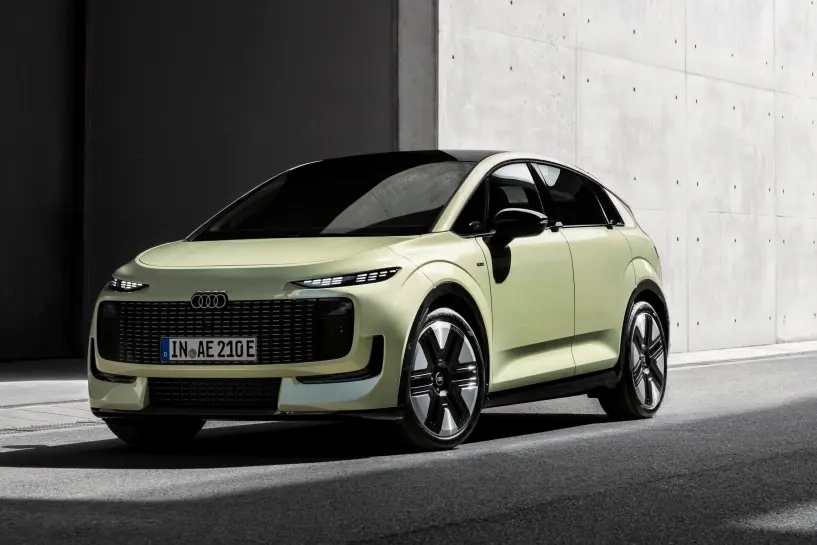
The Audi A2 e-tron is available to order and revives a familiar idea: maximizing space and efficiency in an unusually shaped body. Technically, however, the new electric Audi is much closer to the VW ID.3 than to the namesake launched in 1999.
Both compact cars are based on the Volkswagen Group’s MEB 31 architecture. Their batteries and several powertrain variants are largely identical, and the Cupra Born belongs to the same technical family. Audi primarily sets itself apart through its body, interior, better aerodynamics, and more powerful top version.
The A2 e-tron is not a completely independent electric car, but rather Audi’s more efficient and more extensively individualized interpretation of the ID.3 Neo.
Dimensions and Aerodynamics
At 4.32 m, the Audi is around 6 cm longer than the VW. Their wheelbases, widths, and heights are very similar, however, so both models require about the same amount of parking space in everyday use.
| Specification | Audi A2 e-tron | VW ID.3 Neo |
|---|---|---|
| Length | 4,324 mm | 4,265 mm |
| Width | 1,789 mm | 1,809 mm |
| Height | 1,548 to 1,583 mm | 1,561 mm |
| Wheelbase | 2,768 mm | 2,769 mm |
| Drag coefficient | 0.24 | around 0.26 to 0.27 |
The Audi has a high beltline, smaller windows, and a roof that slopes more steeply toward the rear. Small winglets replace conventional door handles. Despite its relatively upright front end, the A2 e-tron achieves a drag coefficient of 0.24, helped by the body’s more controlled airflow.
The Audi is optionally available with an efficiency package comprising lowered sports suspension and tires optimized for low rolling resistance. However, no separate WLTP consumption figure is stated for this package.
Interior: Audi Places Greater Emphasis on Presentation
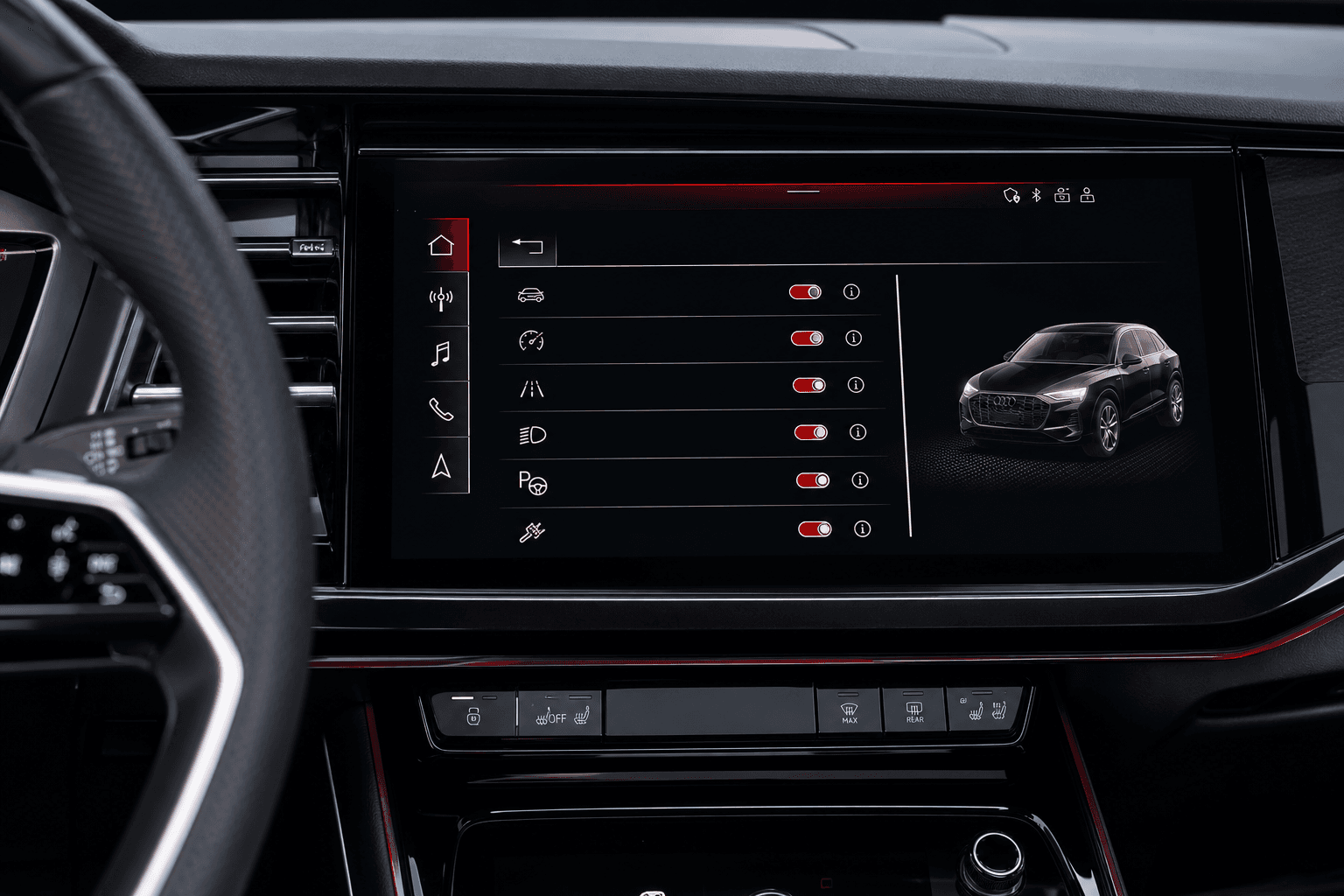
Inside the cockpit, the two Group models take distinctly different approaches. Audi combines an 11.9-inch instrument display and a 12.8-inch touchscreen into a curved unit. The VW pairs a 10.25-inch driver display with a 12.9-inch central screen.
An augmented-reality head-up display is available for both vehicles. In the Audi, it costs €850 as a standalone option, while VW includes the feature in a more extensive assistance package.
The more powerful Audi variants with 170 and 240 kW also receive a 13-liter frunk. Audi lists total cargo capacity of 396 to 1,336 liters, while the VW offers 383 to 1,336 liters. Since the difference exactly matches the frunk’s capacity, it remains unclear whether Audi includes it in the stated figure.
Four Powertrains and Up to 646 km of Range
The three lower-powered versions use the APP350 electric motor with 350 Nm of torque. The top model receives the APP550 with 545 Nm and accelerates from 0 to 100 km/h in 5.7 seconds. All variants have rear-wheel drive.
| Power | Usable battery | WLTP consumption | WLTP range | DC charging | 10 to 80% |
|---|---|---|---|---|---|
| 125 kW | 50 kWh | from 13.7 kWh/100 km | 376 to 423 km | 100 kW | 24 minutes |
| 140 kW | 58 kWh | from 12.8 kWh/100 km | 445 to 515 km | 105 kW | 26 minutes |
| 170 kW | 79 kWh | from 13.9 kWh/100 km | 580 to 646 km | 183 kW | 29 minutes |
| 240 kW | 79 kWh | from 14.2 kWh/100 km | 593 to 630 km | 183 kW | 29 minutes |
The 140 kW version is particularly interesting. Its official consumption of 12.8 kWh/100 km is exceptionally low for an electric compact car. Compared with the equivalent ID.3 Neo, consumption is around 2 to 7% lower, depending on the powertrain.
Because both models use similarly sized batteries, the better efficiency directly translates into additional range. Depending on the variant, the Audi offers up to 23 km more WLTP range. That is useful, but not enough to completely transform everyday use.
Battery Technology and Charging Performance
The 50 and 58 kWh batteries are expected to use LFP cells in a cell-to-pack design. This eliminates conventional battery modules, potentially saving space and materials. By contrast, the large 79 kWh battery is expected to use NMC cells and a more conventional module-based design.
Silicon carbide inverters reduce conversion losses between the battery and electric motor in all powertrain variants. The A2 e-tron can reach up to 183 kW when fast-charging. Under optimal charging conditions, the longest-range model can theoretically add around 16 km of WLTP range per minute.
Price Creates the Biggest Difference
In Germany, the Audi A2 e-tron starts at €38,200. The comparable VW ID.3 Neo has a regular price of €33,995, or €30,995 with VW’s currently applied purchase incentive, a manufacturer-funded discount. Austria and Switzerland have their own price lists and equipment structures.
| Power | Audi A2 e-tron | VW ID.3 Neo, regular price | VW with purchase incentive |
|---|---|---|---|
| 125 kW | €38,200 | €33,995 | €30,995 |
| 140 kW | €41,900 | €39,195 | €36,195 |
| 170 kW | €48,900 | €44,995 | €41,995 |
| 240 kW | €51,200 | no direct equivalent | no direct equivalent |
As standard, the Audi includes LED lighting, 18-inch alloy wheels, navigation, wireless smartphone charging, dual-zone automatic climate control, and a reversing camera. The VW counters with a rain sensor, power-folding exterior mirrors, lane-keeping assistance, and blind-spot monitoring, but the base model has steel wheels, only one climate zone, and no standard navigation system.
The more powerful Audi models receive 19-inch wheels, a frunk, and either comfort suspension or adaptive suspension, depending on the version. Heated seats and a heated steering wheel still cost extra, however. The VW includes both features as standard in the corresponding Life trim.
Which Model Is the Better Choice?
Reasons to Choose the Audi A2 e-tron
- Lower consumption and slightly more WLTP range
- Distinctive design and a more upmarket cockpit presentation
- Powerful 240 kW top version
- More suspension and equipment options
Reasons to Choose the VW ID.3 Neo
- Significantly lower starting price
- Similar battery, powertrain, and charging technology
- In some cases, more extensive standard driver-assistance systems
- An established model with more real-world data, including on VW ID.3 battery longevity
From a purely rational perspective, the ID.3 Neo offers better value for money. With comparable technology, the Audi is slightly more efficient and travels farther, but its advantage remains modest. The premium is therefore mainly worthwhile for buyers who specifically want Audi’s design, the more integrated cockpit, or the 240 kW top version.