Hyundai Tucson N Could Use Hybrid Technology for Performance
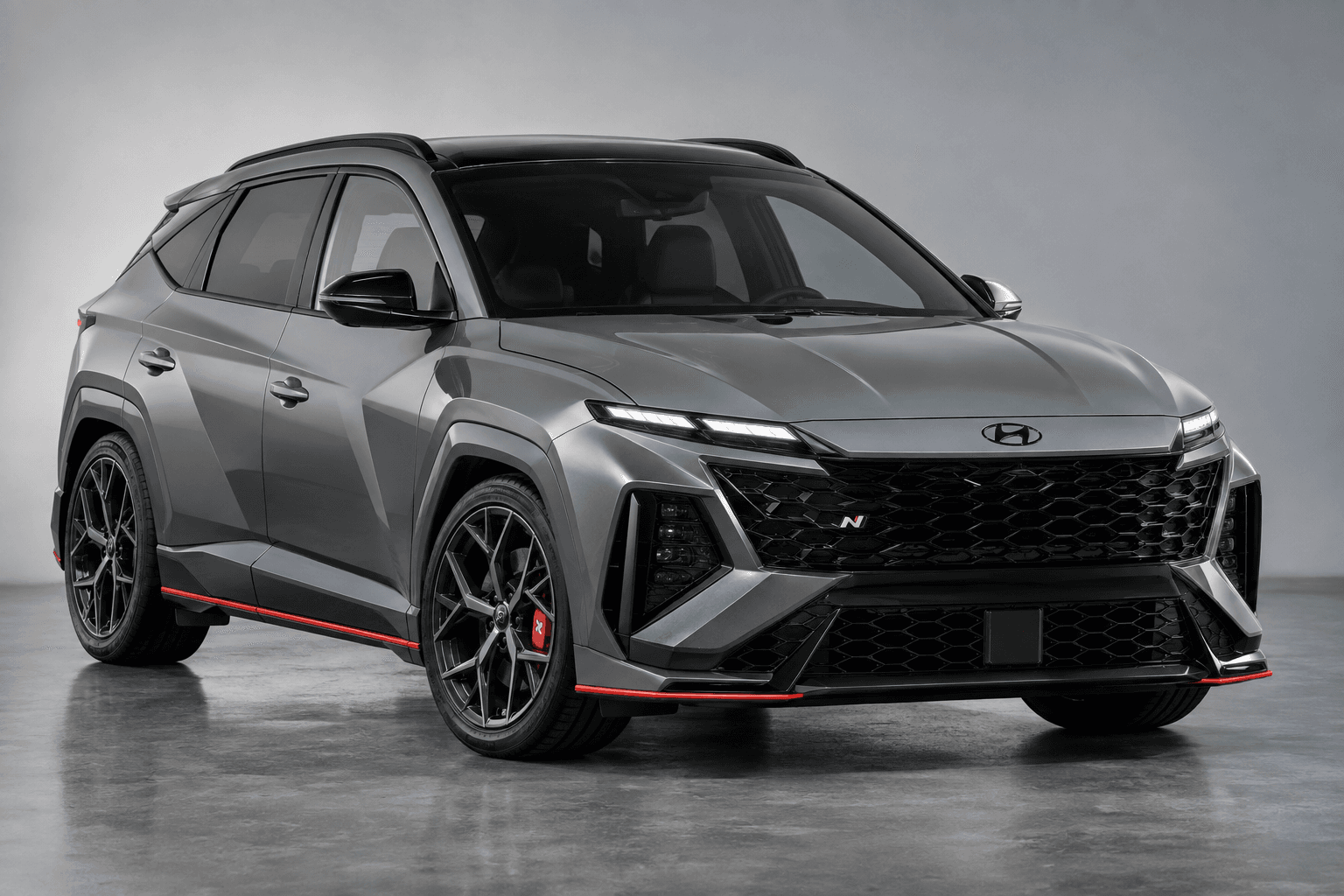
Hyundai is reportedly working on a particularly powerful version of the upcoming Tucson. Instead of a fully electric powertrain or a conventional turbocharged gasoline engine, it could use a performance hybrid specifically tuned for the N sub-brand.
This would be a new approach for Hyundai N. While previous hybrid systems have primarily been designed to reduce fuel consumption and emissions, electrification here would provide additional power, quicker response and greater traction.
The potential Tucson N would use hybrid technology not just to save fuel, but as an integral part of its performance powertrain concept.
Up to 261 kW and All-Wheel Drive Under Discussion
The Tucson N is currently expected to deliver a combined output of between 224 and 261 kW. The electric side of the powertrain could support the turbocharged gasoline engine, particularly in the sporty N modes, and provide torque without noticeable delay.
All-wheel drive is also considered likely. Especially in a relatively large SUV, it would be important for transferring the power to the road in a controlled manner and keeping the vehicle stable when accelerating out of corners.
| Feature | Expected Specification |
|---|---|
| Powertrain | Performance-oriented hybrid with a turbocharged gasoline engine |
| Combined output | Expected to be 224 to 261 kW |
| Drivetrain | All-wheel drive expected |
| Suspension | Adaptive setup likely |
| Market launch | Not yet confirmed |
What Electric Power Adds to Performance Driving
In a performance hybrid, the electric motor can perform several tasks. It fills the combustion engine’s torque gap, improves acceleration and can assist with distributing power between the axles. Press the accelerator → the electric motor delivers torque immediately while the turbo reaches its optimal operating range.
However, thermal management will be crucial. The battery, power electronics and electric motor must continue to operate reliably under repeated heavy loads without power being reduced prematurely. This is precisely what distinguishes a true performance hybrid from a system primarily tuned for low fuel consumption.
Adaptive suspension, larger brakes, and wider wheels and tires are also expected. Hyundai is likely to try to combine the agility typical of N models with the comfort of a family SUV suitable for everyday use.
Hybrid Technology Complements Hyundai’s Electric N Strategy
Hyundai N apparently does not want to commit to a single type of powertrain. With the Hyundai Ioniq 5 N, the brand has already demonstrated how comprehensively an electric performance model can be developed. A Tucson N with a hybrid powertrain would appeal to a different target group seeking to combine high performance and long-distance capability without regular charging.
This concept could be attractive in Germany, Austria and Switzerland, provided fuel consumption, CO2 emissions and pricing remain reasonable. A hybrid does not automatically reduce real-world fuel consumption, particularly during high-speed highway driving or when full power is used frequently. Efficiency depends heavily on battery size, control strategy and vehicle weight.
More Hyundai N Hybrid Models Are Possible
The Tucson could mark the beginning of broader electrification across the N model range. Potential candidates include smaller models such as the next Hyundai Kona, the i20 and the compact sedan sold as the Avante in Korea.
In lighter vehicles in particular, a smaller turbocharged gasoline engine combined with electric assistance could deliver plenty of driving enjoyment. Lower displacement, electric boost and targeted suspension tuning could balance performance and efficiency more effectively than a conventional high-performance powertrain.
However, this is not yet an official model announcement. The Tucson N’s output, technology and market launch remain unconfirmed. The only thing that is clear is that Hyundai N views electrified combustion-engine vehicles, alongside fully electric cars, as a potential pillar of its future performance strategy.