Electric car fires regularly attract attention. Images of batteries emitting smoke for long periods can quickly create the impression that electric cars are particularly prone to catching fire. However, the available evidence does not support this assumption. The crucial distinction is between the probability of a fire and how that fire may develop.
Based on current knowledge, electric cars do not catch fire more often, but a damaged high-voltage battery can make firefighting more difficult.
Myth 1: Electric cars catch fire particularly often
Analyses by insurers, fire departments and public authorities have so far found no reliable evidence that battery-electric cars catch fire more often than vehicles with gasoline or diesel engines. Some studies even indicate a lower fire rate. Nevertheless, giving a blanket figure would be misleading because the underlying data and counting methods vary.
A fair comparison must take into account vehicle age, mileage, fleet size and the specific cause of the fire. On average, electric cars are newer than many combustion-engine vehicles. Some statistics also fail to distinguish clearly between battery-electric cars, plug-in hybrids and other hybrid vehicles. Individual spectacular incidents therefore reveal little about the overall risk.
Why can vehicles catch fire at all?
| Aspect | Electric car | Combustion-engine vehicle |
|---|---|---|
| Typical energy source | High-voltage battery and electrical components | Fuel, oil and hot engine components |
| Possible causes | Severe crash damage, internal cell defect, improper repair | Fuel leak, electrical fault, overheating, crash |
| Distinctive fire behavior | Individual battery cells may undergo thermal runaway | Liquid fuel can spread and ignite rapidly |
| Follow-up checks | Battery temperature must be monitored for longer | Checks for hidden embers and leaking fluids |
In both types of vehicle, ordinary components such as tires, plastics, interior trim or the 12-volt electrical system can also catch fire. Consequently, not every electric car fire starts in the traction battery.
Myth 2: Every crash causes a battery fire
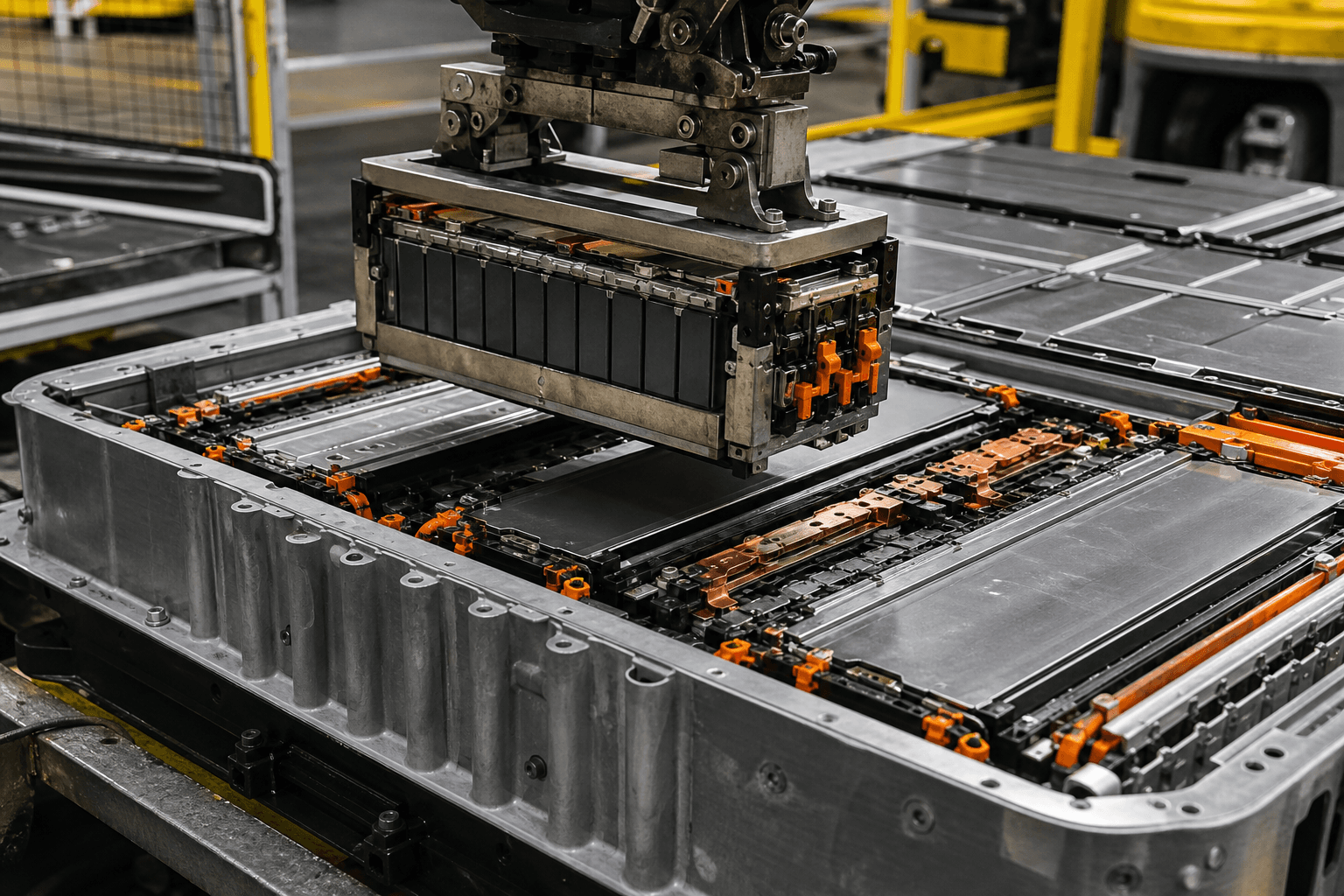
High-voltage batteries are usually protected within the vehicle floor. Sturdy housings, crash structures, fuses and automatic disconnect systems are designed to prevent damaged cables from remaining live. The batteries must also pass mandatory safety and stress tests.
Nevertheless, a severe impact or major deformation can damage battery cells. If an internal short circuit occurs, the cells can heat up significantly. This reaction is known as thermal runaway. Heat from one cell can spread to neighboring cells → the fire may start after a delay or reignite.
After a serious crash, the vehicle should therefore not be moved or charged without professional assistance. Damage to the underbody, unusual noises, smoke, a pungent smell or intense heat are warning signs of possible battery damage.
Myth 3: A burning electric car cannot be extinguished
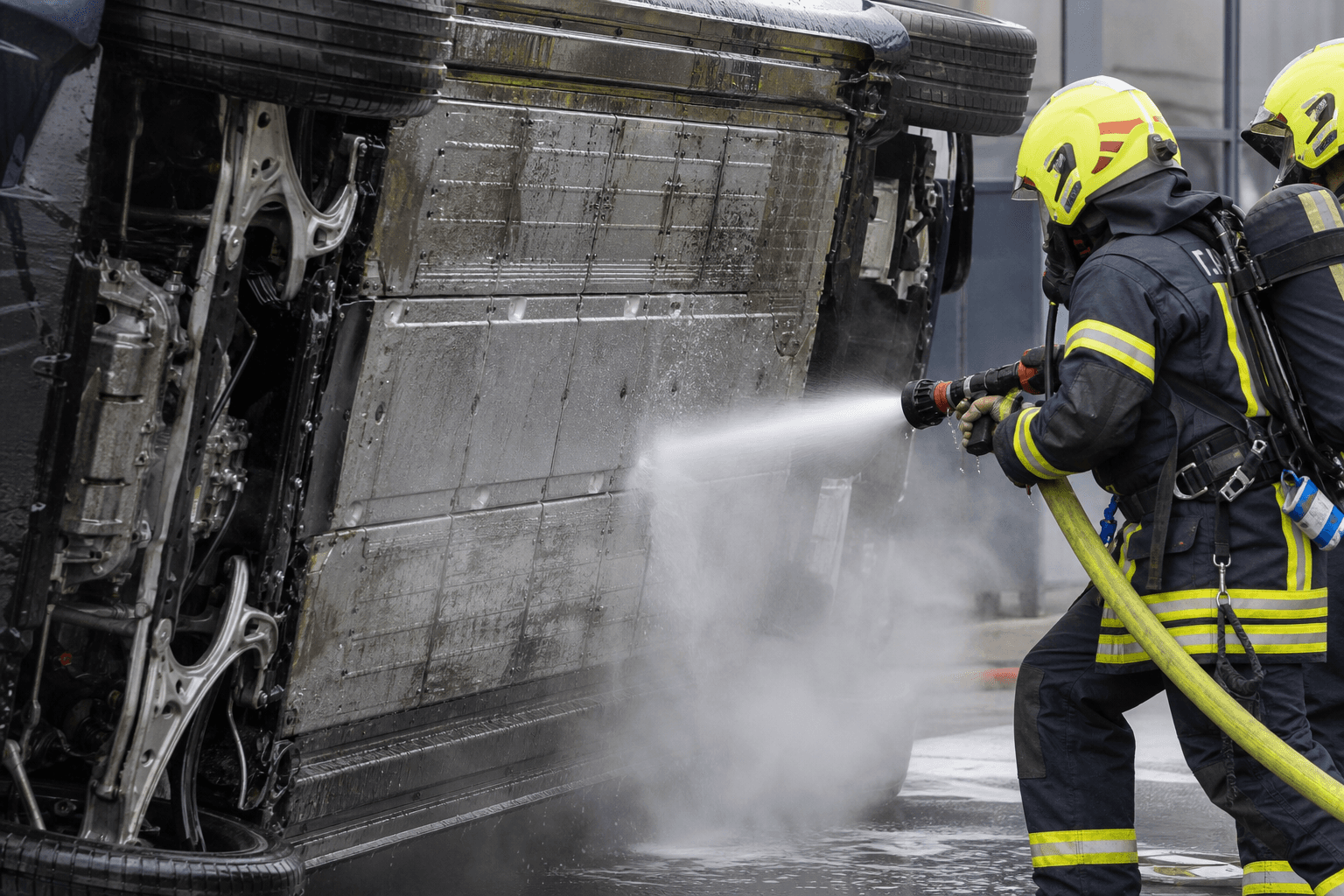
A battery fire can, in principle, be extinguished. Fire departments often use large quantities of water to cool the battery and stop the reaction from spreading between cells. The operation may take longer than dealing with an ordinary vehicle fire. Temperature checks and, if necessary, a safe storage area are subsequently required.
Special containers are not required for every electric car fire. The specific firefighting strategy depends on the vehicle, the damage and the surroundings. Emergency response guides and manufacturer information help first responders locate the battery, electrical isolation points and safe lifting points.
Are underground parking garages unsuitable for electric cars?
Electric powertrains do not inherently create a particular fire risk in underground parking garages. The decisive factors are structural fire protection, functioning smoke extraction systems, escape routes and access for the fire department. These requirements apply to all vehicles.
Charging equipment must be properly planned, installed and inspected. Household electrical outlets are often not designed for prolonged charging at high power. A permanently installed wallbox with suitable protective components reduces risks caused by overloaded wiring or poor electrical contacts.
What should you do if there is smoke or fire?
- Stop and get out: Park the vehicle safely if this is possible without putting anyone at risk. All occupants should move away from it.
- Call emergency services: State that an electric car is involved. Describe the location and any visible signs as precisely as possible.
- Keep your distance: Do not inhale the smoke or touch the vehicle. Even a battery that appears to have gone out can heat up again.
- Do not work on the high-voltage system yourself: Orange cables, battery housings and damaged components must only be handled by trained professionals.
A small fire outside the battery may be tackled with a suitable fire extinguisher, but only if there is a clear escape route and no risk to your own safety. If smoke is coming from the underbody or audible reactions can be heard inside the battery, keep your distance and leave the situation to the fire department.
Conclusion: Less common does not mean harmless
Based on the available data, the claim that electric cars generally catch fire more often is not supported. However, battery fires present first responders with particular challenges because they must account for intense heat, possible reignition and the need for extended monitoring. For drivers, proper charging, professional repairs and appropriate behavior after a crash remain the most important precautions.