Audi A6 e-tron Sets Range Record
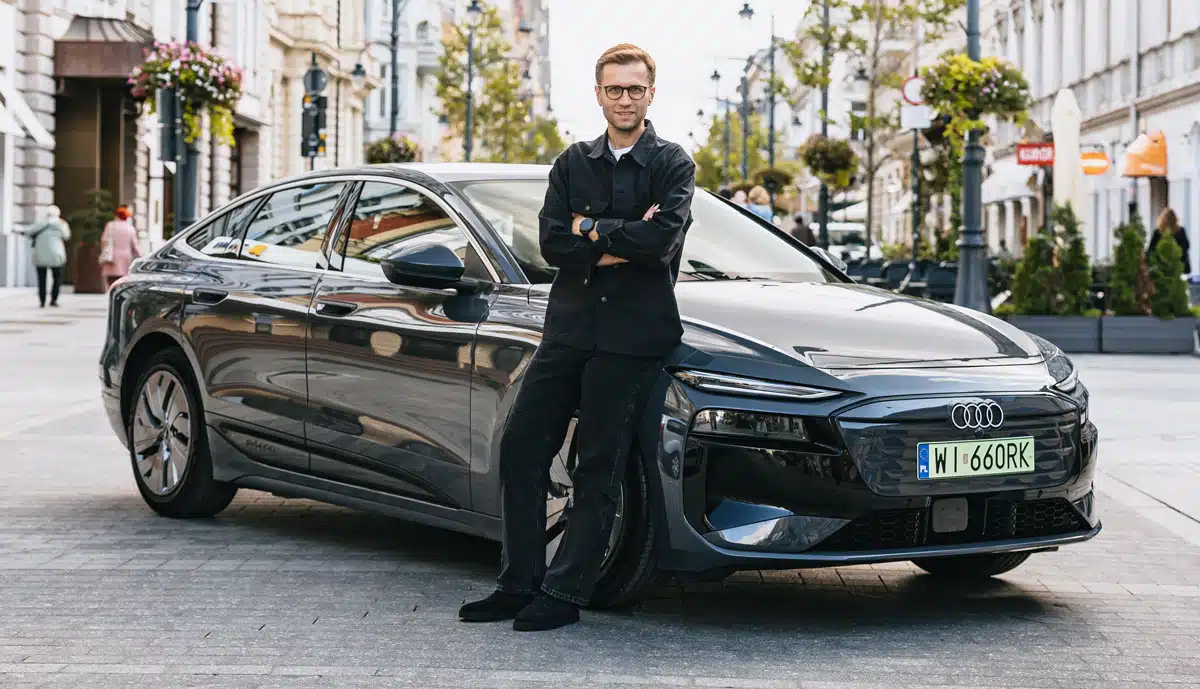
The Audi A6 Sportback e-tron performance covered 1,338 km on a single battery charge. Guinness World Records recognized the drive as the longest distance completed by a production electric car on a single charge.
European rally champion Marczyk was behind the wheel. The drive began at 1:55 a.m. on September 11 and followed the Vistula River through Poland. After more than 45 hours, the record attempt ended between Toruń and Ciechocinek.
Covering 1,338 km on a single charge is impressive proof of efficiency, but it is not a range forecast for normal highway driving.
Consumption of Just 7.09 kWh per 100 km
At the end, average energy consumption stood at just 7.09 kWh/100 km. Mathematically, consumption over the entire distance corresponds almost exactly to the usable battery capacity of 94.9 kWh.
The route ran via Kraków, Sandomierz, Warsaw, Toruń and Grudziądz to Hel on the Baltic Sea. The car then returned along the same route. According to Audi, the drive took place in regular traffic, including during rush hour at times.
| Metric | Record Drive |
|---|---|
| Distance covered | 1,338 km |
| Average consumption | 7.09 kWh/100 km |
| Driving time | more than 45 hours |
| Usable battery capacity | 94.9 kWh |
| WLTP range | up to 777 km |
| Drag coefficient | 0.21 |
Why the Record Is Not Comparable to Everyday Driving
The distance and total duration produce a calculated travel speed of less than 30 km/h. The exact average driving speed may differ, but the long duration nevertheless makes it clear that consistent efficiency driving—not fast travel—was the priority.
The difference from the official WLTP range of up to 777 km must be viewed in the same context. In normal road traffic, speed, weather, heating, traffic and route profile determine consumption. The Audi A6 Sportback e-tron range update also shows how efficiently the electric Audi already performs in the standardized test cycle.
Conditions were not consistently summery either. The average temperature was 15°C, falling to 7°C in the early morning. That is far from ideal for such a record because a cold battery and the need for heating can increase consumption.
Aerodynamics and Regenerative Braking as Key Factors
The A6 Sportback e-tron is based on the Volkswagen Group’s Premium Platform Electric. Its 800-volt architecture is primarily relevant to high charging rates, while aerodynamics, powertrain efficiency and thermal management were decisive on this drive.
With a drag coefficient of 0.21, the Sportback is considered the most aerodynamic production Audi. This pays off particularly at higher speeds, where Audi says air resistance accounts for around 40% of energy consumption.
It also offers regenerative braking power of up to 220 kW. According to the manufacturer, the system can handle around 95% of braking events in everyday driving without using the mechanical brakes. Anticipatory driving → fewer deceleration losses and lower overall consumption.
What EV Drivers Can Learn from the Record
Covering 1,338 km in one go requires extreme discipline, but some measures also work in normal everyday driving. Correct tire pressure, a steady speed and early deceleration improve efficiency regardless of the vehicle model.
- Check tire pressure regularly
- Use regenerative braking levels appropriate for the route
- Avoid unnecessarily hard acceleration
- Monitor traffic and the road ahead well in advance
Above all, the world record demonstrates the technical potential of the Audi A6 e-tron. Anyone driving briskly on the highway in everyday use will not reproduce the 1,338 km. Nevertheless, the drive is remarkable as evidence of the platform’s, powertrain’s and body shape’s efficiency.